Free template
SOW template: a statement of work that protects the money
A free statement of work (SOW) template in Word. Scope, what's not included, a milestone payment schedule, payment terms and a change-order clause, in plain English. Fill in the brackets, send it with your proposal.
A good SOW isn’t legal theatre. It’s the document you point at when a client says “I thought that was included.” Get it right and half your billing arguments never happen.
This is the template I wish I’d used for the first ten years of running my agency. Plain English. No “heretofores.”
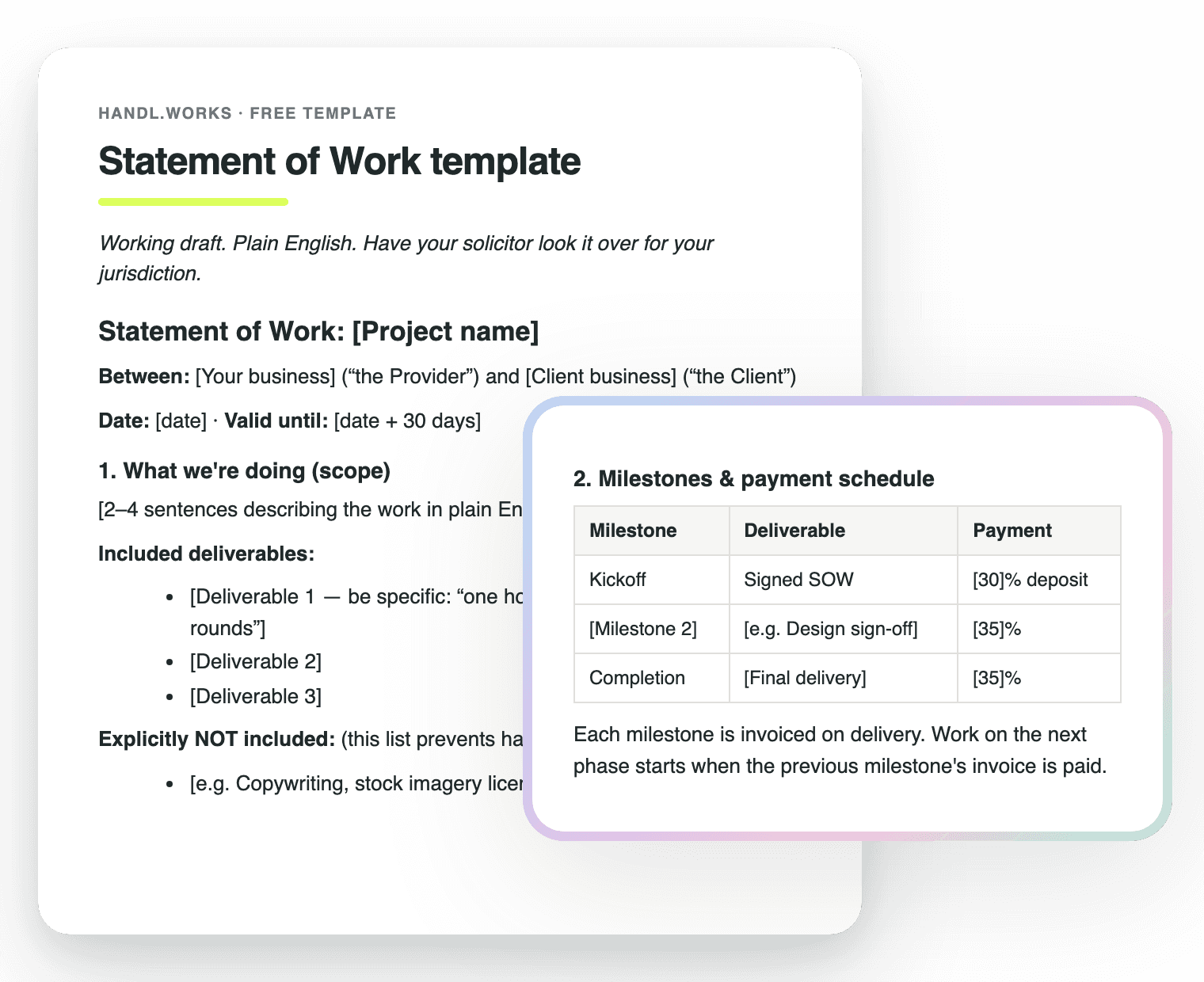
What’s inside
Scope, written tight
What's in, and the bit everyone forgets: what's explicitly out.
Milestone payment schedule
Deposit + milestones, so you invoice on delivery instead of end-of-month.
Change-order language
The clause that turns “quick favour” into a billable line item.
Payment terms
Net 14 baked in, with a late-fee clause that does its job just by existing.
Approval + sign-off blocks
Who signs, when, and what they're agreeing to.
SOW questions, answered
What is a statement of work (SOW)?
A statement of work is the document that says exactly what you'll deliver on one project, by when, for how much, and what happens when the client asks for more. It sits under your contract and is specific to a single project.
If a client ever says “I thought that was included,” the SOW is what you both point at.
Is it scope of work or statement of work?
Both get used, and they're not the same thing. The scope of work is one section: the list of what's included and, just as important, what isn't. The statement of work is the whole document: the scope plus milestones, the payment schedule, payment terms, the change process and sign-off.
So if a client asks for a scope of work, send them the SOW. It covers both.
Statement of work vs proposal vs contract: what's the difference?
The proposal sells the work: why you, the approach, the price options. The SOW defines the project once they've said yes: exact deliverables, dates and payments. The contract (or master services agreement) holds the legal terms that apply across every project: liability, IP, termination.
Smaller agencies often fold the proposal and the SOW into one document. Keep the contract separate though... otherwise you end up renegotiating the legal terms on every job.
Who writes a statement of work?
Usually the agency or freelancer doing the work, because you're the one who knows what's realistic. Bigger clients sometimes send their own through procurement. If they do, read the scope and payment sections hardest, and push for milestone payments rather than one payment at the end.
How do you break a SOW into milestone payments?
Tie each payment to something the client signs off, not to a date you hope to hit. A common split is a deposit at kickoff, a payment at the main sign-off and the rest on delivery, which is what this template uses (30 / 35 / 35). The next phase starts when the previous invoice is paid.
What happens when the client asks for something that isn't in the SOW?
That's a change. The template's change-order clause says changes get quoted in writing (what's added, what it costs, what it does to the timeline) and approved before the work starts. Approved changes go on the next invoice.
Where the SOW goes next
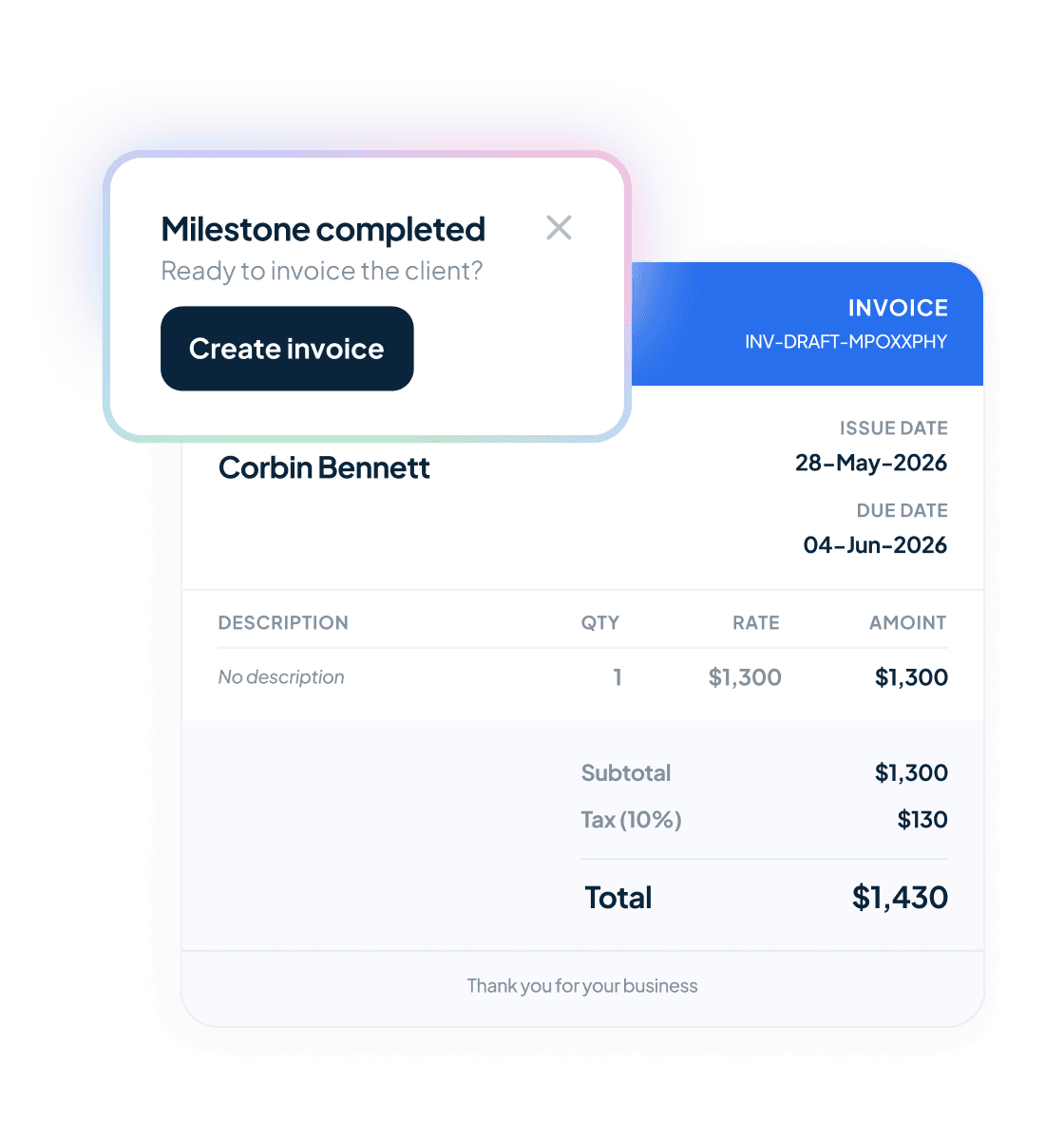
Each milestone's invoice, drafted for you
The SOW sets the milestones. In Handl those same milestones sit on a timeline, and when one is signed off, Handl drafts its invoice for you to send. Reminders follow if you’ve switched them on for the project.
Use the template first. When you’re tired of retyping the milestone schedule into an invoice, that’s the moment.
Worth knowing
Why net 14, why milestones
Free download
Get it free
Drop your email and the document lands in your inbox as a Word file (opens in Google Docs too). The download link is on screen as well, so you're not waiting on email.
A working draft, not legal advice. Have your solicitor look it over for your jurisdiction.

Reclaim your time
Invoices that build themselves from milestones, hours and retainers.
Invoices built from the work. Books stay in QuickBooks or Xero.