Glossary
Billing terms, in plain English
No one teaches freelancers this stuff. So here's the money side of the business explained the way I'd explain it to a mate — no jargon, no lecture.
Half the reason people get paid late is they’re not sure what the terms even mean, so they avoid setting them. Net 30? Dunning? AR aging? Here’s what they actually mean and why they matter to your cash flow.
This grows over time. Got a term you want added? Tell me. Each one’s about a paragraph — enough to actually use, not a Wikipedia rabbit hole.
- Net 30
- Payment is due 30 days after the invoice date. Sounds standard, but it's quietly brutal on cash flow — you've done the work and you're waiting a month to see the money, and your first follow-up doesn't even happen till day 31. Most freelancers default to net 30 without thinking. Switch to net 14 and most clients won't even notice — but you'll get paid two weeks sooner.
- Scope creep
- When the work quietly expands beyond what you agreed to — “just one more revision,” “quick favour,” “can you also...” — without anyone agreeing to pay more. It's the number-one killer of agency margins. The fix isn't being precious about it; it's logging every change the moment it lands, so both sides see the running total before invoice day instead of fighting about it after.
- Retainer
- A recurring fee — usually monthly — for ongoing access to your work, capped at an agreed scope or number of hours. Done right, it's predictable income you can plan around. Done loosely, it's unlimited work for a fixed fee. The difference is a clear hours cap, overage terms, and billing in advance so you hold the money before you do the work.
- Milestone billing
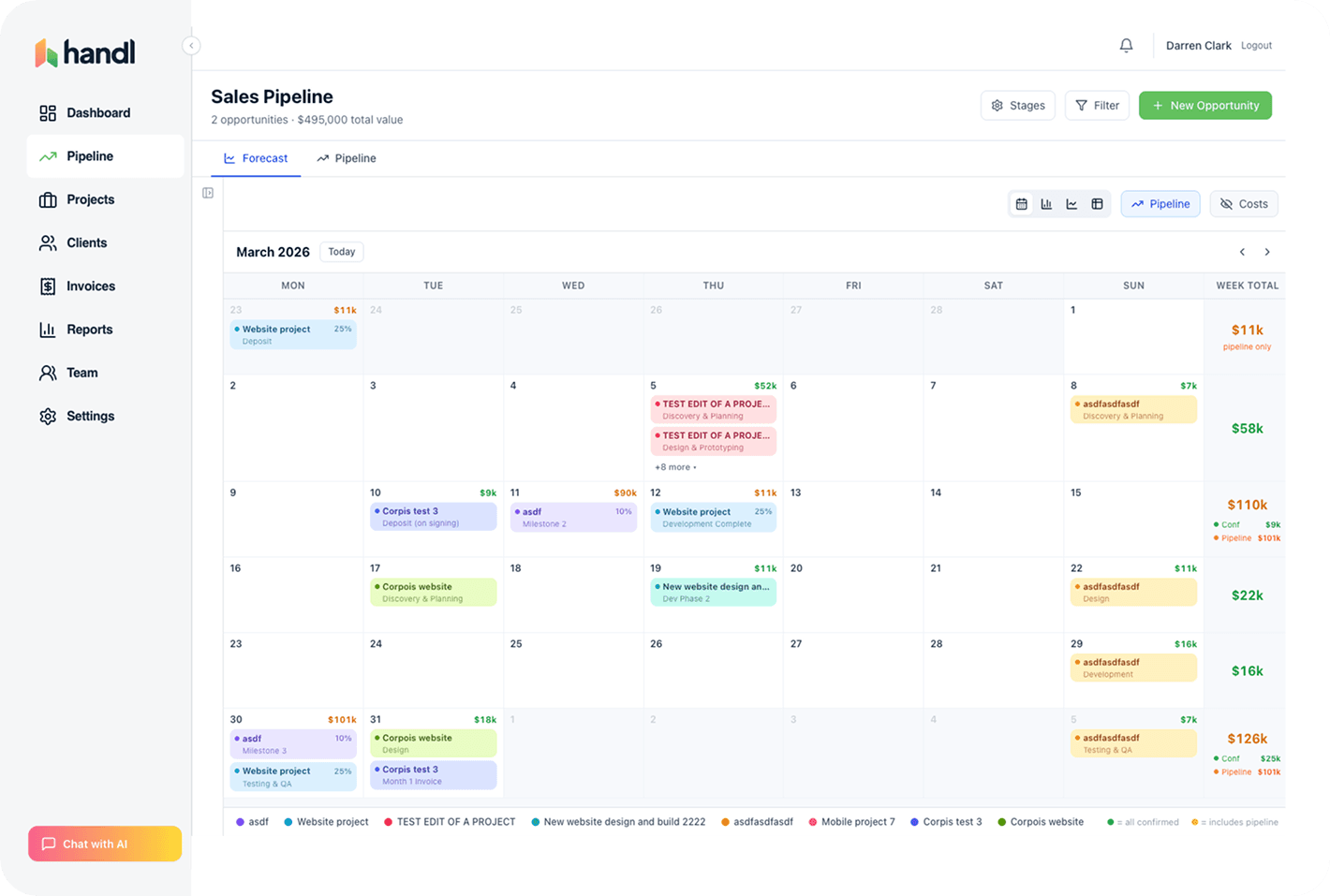
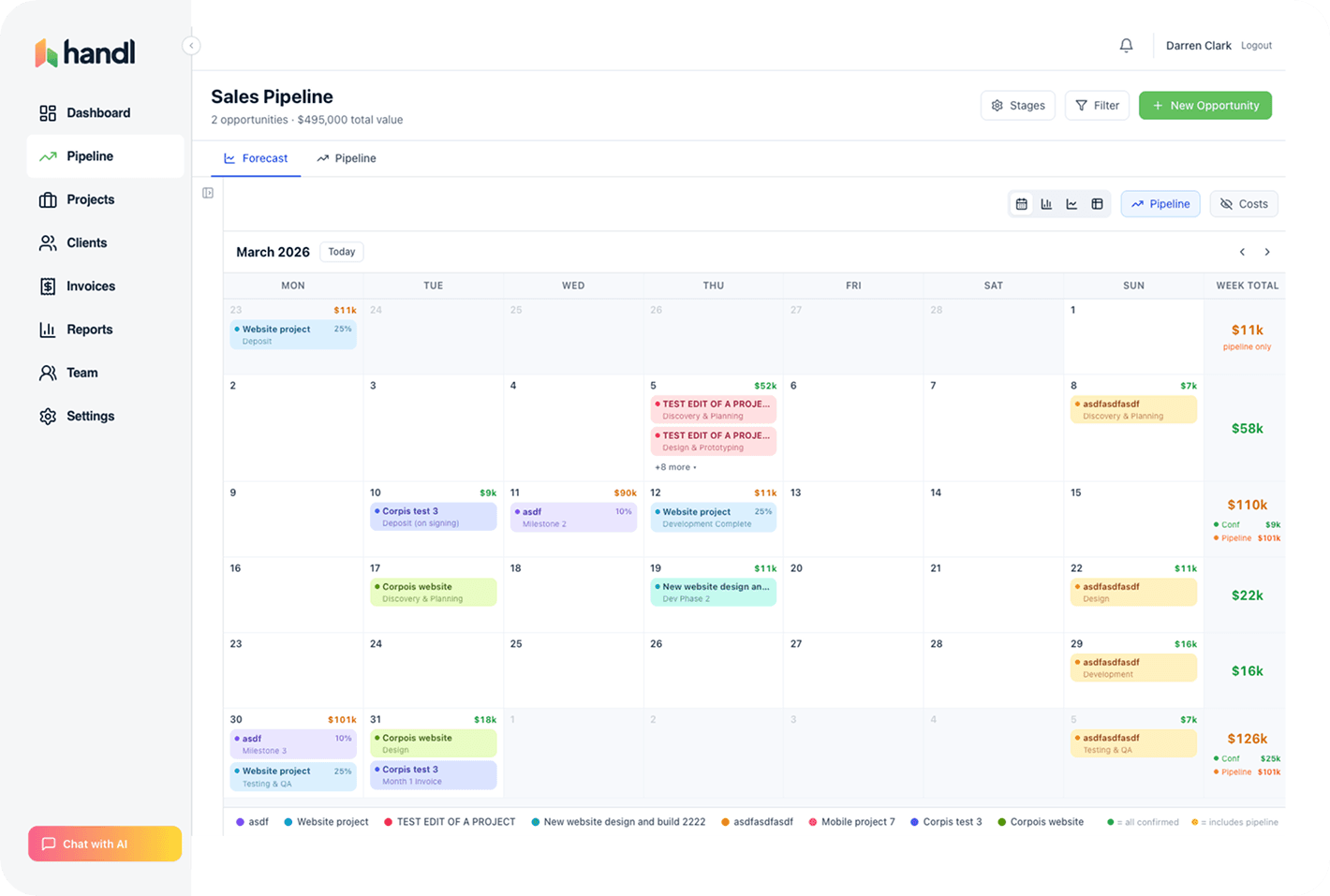
- Instead of one invoice at the end (or end-of-month bunching), you bill as you hit agreed checkpoints — deposit, phase one, phase two, launch. You get paid while the work's fresh and the client's happy, your cash flow smooths out, and a stalled project never leaves you 100% unpaid. It's the single best billing change most project-based businesses can make.
- Change order
- A short, written record of work requested outside the original scope — what's being added, what it costs, what it does to the timeline — approved before the work starts. It turns “I thought that was included” into a line item everyone agreed to. Doesn't need to be formal. It needs to be in writing, and it needs to happen before you do the work, not after.
- Dunning
- The polite industry word for chasing overdue payments — the sequence of reminders that goes out after an invoice is due. Good dunning is a calm, scheduled cadence (pre-due nudge, day-of, 3 days over, 7, 14, 30), not a panicked email when you suddenly notice the money's late. Automate it and you stop being the bad guy — the system chases, not you.
- AR aging
- Accounts-receivable aging: a breakdown of what you're owed, sorted by how overdue it is — current, 30 days, 60, 90+. It's the report that tells you the truth about your cash flow. If you've got money sitting in the 60- and 90-day columns, that's not a client problem, that's a follow-up problem. Watch this number and you'll catch trouble before it becomes a write-off.
- Payment terms
- The rules of getting paid, spelled out before the work starts: when payment's due (net 14, net 30), the deposit, the late fee, how they can pay. The mistake isn't picking the wrong terms — it's not setting any, then feeling awkward about it later. Put net 14 and a late-fee clause in your contract from day one. The late fee speeds up payment just by existing, even if you never enforce it.
Want to know which of these is actually costing you money?
Run a free Payment Health Check
Reclaim your time
Stop being your own debt collector.
Get paid faster with automated invoicing and reminders.