
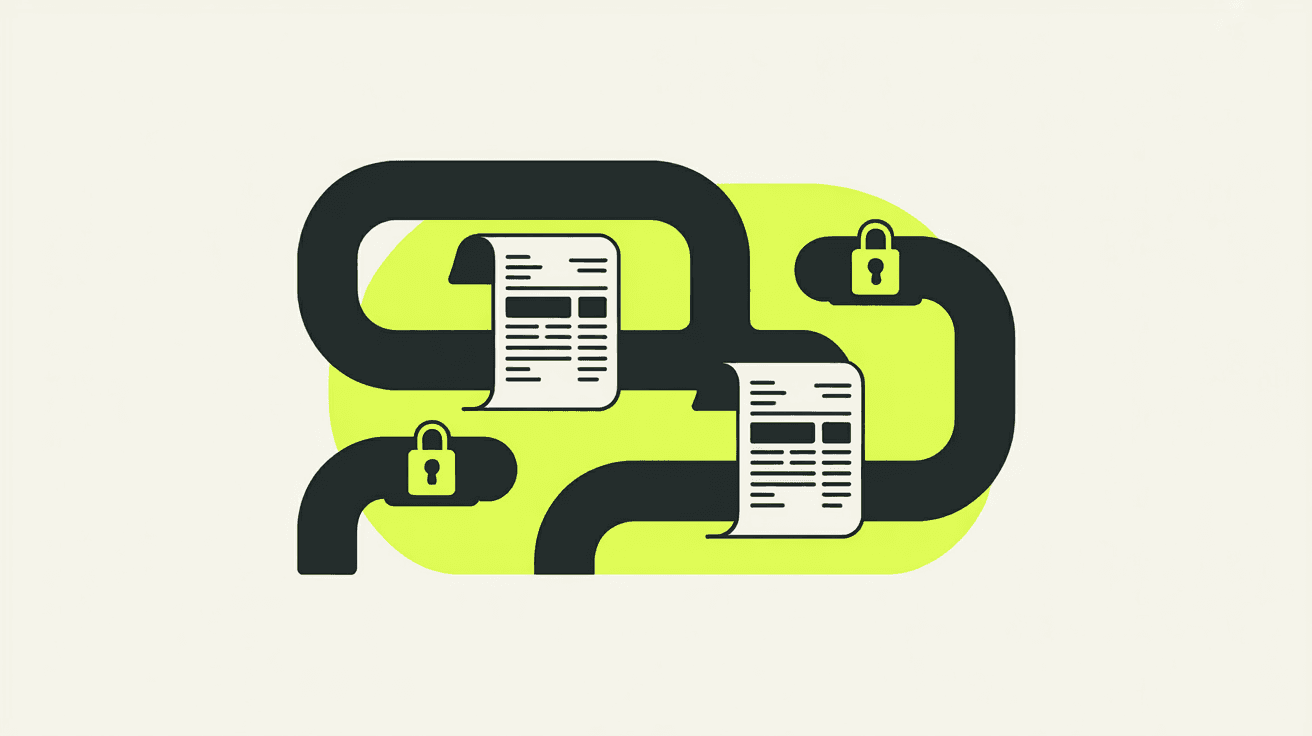
Your invoice isn't being ignored. It's in a queue nobody owns.
That's the single most useful thing I can tell you about getting paid by bigger clients. When you send an invoice into a company with a real finance department, it doesn't land on a person's desk who then decides to pay you. It enters a process — and that process is slower, dumber and more impersonal than you think.
Once you understand the machine, two things happen. You stop taking the wait personally, and you start giving the machine exactly what it needs to spit your payment out faster.
Let me walk you through what's actually happening in there.
Your invoice doesn't get paid. It gets processed.
Here's the journey your invoice takes inside a mid-size or large client:
- It arrives in a shared accounts payable inbox — not a person, an inbox.
- Someone matches it against a purchase order and the original goods-received note. No PO, or a mismatch, and it stops right here.
- It gets routed to an approver — usually the budget owner who signed off the work.
- Often it needs a second approver above a certain dollar threshold.
- Once fully approved, it joins the pile waiting for the next scheduled payment run.
- The payment run goes out — weekly, fortnightly, or monthly.
Notice how many of those steps have nothing to do with whether anyone likes your work. You could be their favourite supplier on earth and your invoice still has to walk every step of that path.
And notice the last one especially. Even a fully approved invoice doesn't get paid the day it's approved. It waits for the run. If their run is monthly and you just missed it, you're waiting up to four weeks before a single human even thinks about you again.

Batch payment runs: why "the money's coming Friday" is a real thing
Small businesses pay bills as they land. Big ones don't. They batch.
A payment run is exactly what it sounds like — finance sets aside a day (say, every second Thursday) and pays everything that's been approved and is due by then, all at once. It's efficient for them and invisible to you.
The practical upshot: the date you get paid is set by their calendar, not yours. Your net-14 terms are almost meaningless if their run only fires on the last business day of the month. Approved on the 2nd? You're still waiting until the 30th.
This is genuinely good news, because it's fixable with one question. If you know a client runs payments fortnightly on Thursdays, you know exactly when to have your invoice approved by — and you can send it early enough to make the cut instead of missing it by a day and eating a two-week delay.
The multi-signer chain: where invoices go to sit
The approval chain is where most of the silent delay lives.
Your invoice needs a yes from a human. That human is busy, travelling, on leave, or drowning in their own inbox. If the amount is above a threshold, it needs a second human, who is also busy. Neither of them thinks of your invoice as urgent, because to them it's one line in a list of forty.
The numbers back this up. APQC's benchmarking puts invoice-receipt-to-approval anywhere from 2.8 days at the best-run companies to seven-plus days at the slow end. And here's the kicker — 49% of AP leaders themselves say approvals take too long (Ardent Partners, 2025). The people running the process agree it's broken. That's how you know it's not about you.
So when your invoice sits for a week with no reply, the most likely story isn't "they're unhappy." It's "it's parked in an approver's inbox behind thirty other things, and nobody's job is to chase it." Nobody owns your invoice. That's the whole problem.

The rule that quietly costs you two weeks: errors reset the clock
This one is brutal and almost nobody warns you about it.
If your invoice has an error — wrong PO, wrong billing entity, a line that doesn't match the agreed amount — many companies don't fix it for you. Their policy is to reject it and start the payment clock over from the day the corrected invoice arrives.
This is written into published AP procedures — you can find it spelled out at institutions like Texas State University and Indiana University. A charge that wasn't pre-authorised or properly documented may not even be considered owed until it's resolved.
Think about what that means. A typo in a PO number doesn't cost you a quick fix. It costs you the entire processing time again — another trip through matching, approval, the second signer, and the next payment run. One wrong digit, two extra weeks, and often no one even tells you it happened. You just sit there wondering why it's quiet.
Which is exactly why the fix is on your side of the fence, not theirs.
The checklist that gets you through the maze
You can't speed up their approvers or move their payment run. But you can stop being the invoice that gets kicked back or lost. Here's the checklist.
Send it to the right recipient. Not your day-to-day contact — the actual AP inbox or the person who processes invoices. Ask who that is. Your project contact is the approver, not the processor, and sending it only to them means it might never get entered at all.
Put the PO number on it. If they issued a purchase order, that number is the key that unlocks the whole matching step. No PO number, and your invoice can't be matched, so it stops at step two. Ask for the PO before you invoice, not after.
Itemise, and make every line error-free. Clear line items that map exactly to what was agreed and what was quoted. Every line the AP clerk can match without thinking is a line that can't get your invoice bounced. Remember the reset-the-clock rule — clean invoices are the cheapest insurance you'll ever buy.
Ask about their payment run schedule. Genuinely just ask: "When's your next payment run, and when do you need this approved by to make it?" It's a completely normal question, it makes you look organised rather than needy, and it tells you the real due date — the one their calendar enforces, not the one on your terms.
Confirm receipt and approval, don't assume. Silence isn't a signal. Get confirmation that it landed and got approved, because "no reply" usually means "stuck in an approver's inbox," not "problem."
The empathy shift that makes this easier
Here's what changes when you internalise all this: you stop firing off resentful emails, and you start working the system.
Your invoice isn't being ignored. It's in a queue nobody owns, waiting on approvers who agree the process is too slow, to be paid on a calendar you can't see. That's not a relationship problem. It's a logistics problem — and logistics problems have logistics fixes.
If you want the bigger picture on why clients pay late — the liquidity, the strategy, the psychology of it — I pulled it all together in why clients actually pay late. And once your invoice is through the maze but still not paid, the answer isn't to chase harder, it's to remind smarter: do payment reminders annoy clients covers what actually works.
The best move, honestly, is to stop being the one manually tracking all this. Handl's AI billing agent watches the invoice for you — sends it clean, nudges before the due date, and follows up after — so you're not sitting there refreshing a bank feed wondering which step of the maze your money got lost in.